experience healing in 2026 schedule your consultation appt today 334-293-1411

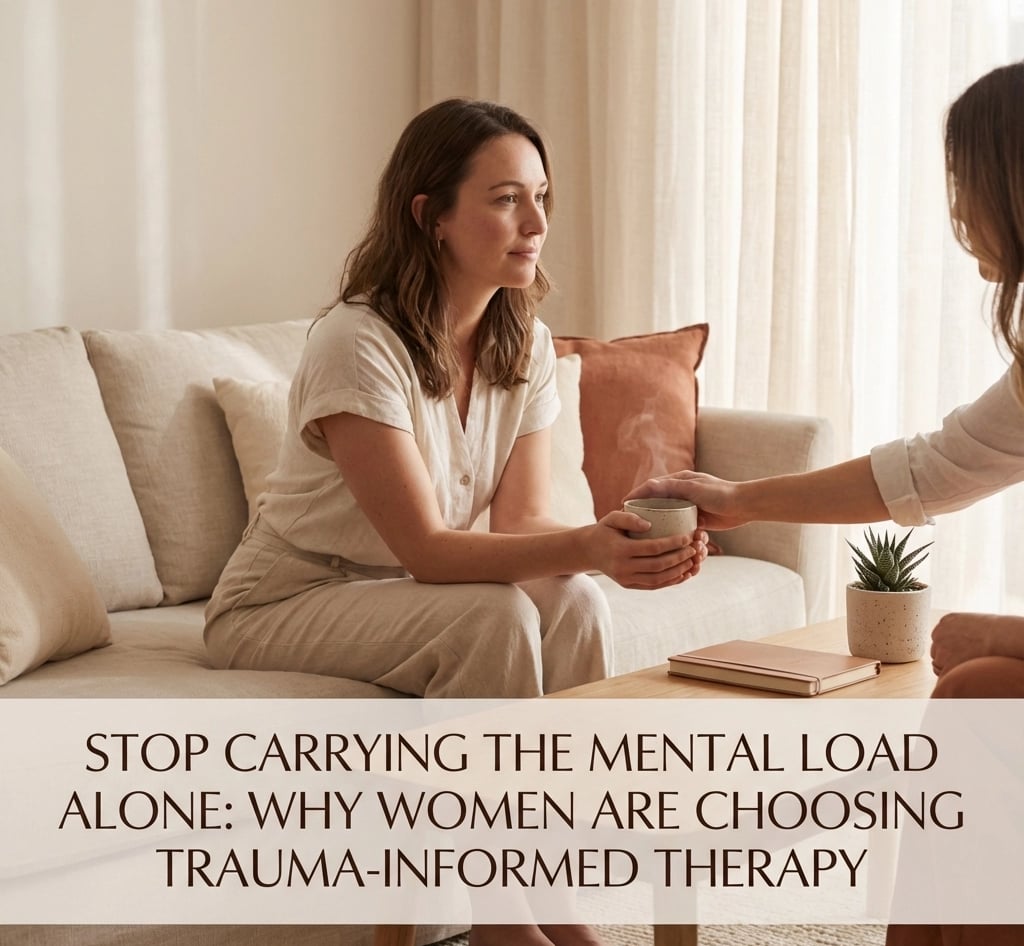
Stop Carrying the Mental Load Alone: Why Women Are Choosing Trauma-Informed Therapy
Fightress Aaron
1/5/20266 min read
You wake up at 5:30 AM, already thinking about the day ahead. While making coffee, you're mentally organizing your daughter's soccer schedule, planning dinner, remembering to call your mother, and reviewing the presentation you're giving at work. By 6 AM, you've already shouldered a dozen invisible tasks that no one else even knows exist.
If this sounds familiar, you're carrying what experts call the "mental load" – and you're far from alone.
What Is the Mental Load (And Why Are You Carrying It Alone)?
The mental load refers to the invisible cognitive and emotional labor involved in managing a household, family, career, and relationships. It's not just the physical tasks you do; it's the constant mental planning, remembering, organizing, and worrying that keeps everything running smoothly.



For many women, especially high-achieving professionals and mothers, this mental load includes:
• Anticipating everyone's needs before they even ask
• Remembering appointments, deadlines, and special events for the entire family
• Managing emotional dynamics in relationships and social situations
• Planning and coordinating schedules, meals, and logistics
• Worrying about outcomes and taking responsibility when things go wrong
• Being the "default parent" or the one everyone turns to for solutions
The exhausting reality? Much of this work is invisible to others, leaving you feeling overwhelmed and unsupported while maintaining the appearance that you've "got it all together."
The Hidden Cost of Being "The Strong One"
High-functioning women often become masters at carrying this mental load because society has taught us that our worth comes from our ability to manage everything seamlessly. You might recognize yourself in these patterns:
The Perfectionist Trap: You set impossibly high standards for yourself while being endlessly forgiving of others' mistakes. Every task becomes a reflection of your competence, making delegation feel risky.
The Anticipation Anxiety: Your mind constantly races ahead, playing out worst-case scenarios and creating backup plans for situations that may never happen. This hypervigilance stems from a deep-seated belief that you must prevent problems before they occur.
The Emotional Manager Role: You're not just managing logistics; you're managing everyone else's emotions too. You smooth over conflicts, boost others' moods, and absorb their stress – all while suppressing your own needs.
The "I Can Handle It" Mentality: Asking for help feels like admitting failure. You've learned to pride yourself on independence, but this strength has become a prison of isolation.
When Strength Becomes Survival Mode
What many women don't realize is that constantly carrying this mental load can create trauma responses in your nervous system. Your body begins operating from a place of chronic stress, hypervigilance, and emotional dysregulation – even when there's no immediate danger.
Why Traditional Therapy Isn't Always Enough
You might have tried traditional talk therapy before, only to find yourself going in circles, discussing the same problems week after week without experiencing deep change. While cognitive approaches can be helpful, they often miss a crucial piece: trauma lives in the body, not just the mind.
This is where trauma-informed therapy becomes revolutionary for women carrying the mental load. Rather than just talking about your stress and overwhelm, trauma-informed approaches work with your nervous system to create actual healing and regulation.


Brainspotting
Brainspotting accesses trauma and stress that's stored deep in your subcortical brain – the part that controls your automatic responses and survival instincts. By focusing on specific eye positions while processing difficult emotions, Brainspotting can help release the chronic tension and hyperarousal that keeps you in "manager mode."
This approach is particularly powerful for high-achieving women because it doesn't require you to intellectually understand everything. Instead, it allows your body's wisdom to guide the healing process.
Internal Family Systems (IFS)
IFS recognizes that we all have different "parts" of ourselves with different roles and motivations. The part of you that carries the mental load is likely a protective part that developed to keep you safe and valued.
Through IFS work, you'll learn to appreciate this part while also helping it relax and trust that you can receive support. You'll reconnect with your authentic Self – the part of you that exists beyond your roles and responsibilities.
Why Women Are Choosing This Path Now
The conversation around mental load and emotional labor has exploded in recent years because women are finally naming what they've always known: this invisible work is real, exhausting, and unsustainable.
More women are seeking trauma-informed therapy because:
It validates your experience: Your overwhelm isn't weakness; it's a natural response to carrying an unnatural load.
It offers real solutions: Rather than just managing symptoms, these approaches address root causes and create lasting change.
It honors your complexity: As a woman, especially if you're a mother or professional of color, your experiences are layered and intersectional. Trauma-informed therapy can hold all of these complexities.
It empowers choice: Instead of telling you what you should do differently, trauma-informed therapy helps you reconnect with your own wisdom and make choices from a regulated, grounded place.
What to Expect When You Start This Journey
Beginning trauma-informed therapy can feel vulnerable, especially when you're used to being the one who has it all together. Here's what the process typically looks like:
Initial Safety and Stabilization: You'll learn nervous system regulation techniques and establish a sense of safety in your body before diving into deeper work.
Processing and Integration: Through modalities like EMDR or Brainspotting, you'll work through the experiences and patterns that created your current coping strategies.
Reconnection and Empowerment: As your nervous system heals, you'll naturally begin to set boundaries, ask for help, and share your mental load in healthy ways.
Your Healing Doesn't Have to Wait
You don't have to carry this load alone anymore. You don't have to wait until you're completely burned out to seek support. You don't have to prove your strength by suffering in silence.
Healing is possible. Connection is possible. A life where you feel supported and regulated is possible.
The women who are transforming their lives through trauma-informed therapy aren't different from you. They're simply ready to stop carrying everything alone and start carrying themselves toward healing.
Your nervous system has been working overtime to keep you safe and successful. Now it's time to give it the support it needs to heal and thrive.
To receive support and learn more about our trauma-informed therapy services, visit us at www.nbcounselingllc.com or call or text us at 334-293-1411. Your journey toward healing and connection is waiting.


This isn't just about being "stressed" or "overwhelmed." When you're constantly in survival mode, your brain literally changes. You might experience:
• Emotional numbness or feeling disconnected from yourself
• Difficulty making decisions because your nervous system is overloaded
• Physical symptoms like headaches, digestive issues, or chronic fatigue
• Relationship struggles because you're too depleted to be emotionally present
• Loss of identity beyond your roles as caregiver, employee, or problem-solver
If you're a Black woman, these challenges may be compounded by cultural expectations of being the "strong Black woman" who never breaks down, additional workplace pressures, and historical trauma that gets passed down through generations.
How Trauma-Informed Therapy Transforms Your Mental Load Experience
Trauma-informed therapy recognizes that your tendency to carry everything alone isn't a character flaw – it's an adaptation your nervous system created to help you survive. This approach offers three key shifts:
From Shame to Understanding: Instead of judging yourself for being "too sensitive" or "unable to handle stress," you'll understand how your brain and body are actually trying to protect you. This knowledge alone can be profoundly healing.
From Managing to Healing: Rather than just learning coping strategies to manage your overwhelm better, you'll address the underlying nervous system patterns that keep you stuck in hypervigilance and people-pleasing.
From Isolation to Connection: Trauma-informed therapy helps you recognize that healing happens in relationship. You'll learn to receive support and share your load in ways that feel safe and sustainable.
Three Powerful Approaches for Deep Healing
At New Beginnings Counseling, we offer specialized modalities that work directly with your nervous system to create lasting change:
EMDR (Eye Movement Desensitization and Reprocessing)
EMDR helps your brain process and integrate difficult experiences that may be driving your need to control and anticipate everything. Through bilateral stimulation (like eye movements), EMDR allows your nervous system to complete the trauma responses that keep you stuck in hypervigilance.
Many women find that after EMDR sessions, they naturally feel less compelled to carry everyone else's emotional load. The constant mental chatter quiets down, and decision-making becomes easier.


Connect
Reach out for personalized healing support.
hello@nbcounselingllc.com
© 2025. All rights reserved.
LOCATION
Serving clients located in Alabama and Florida