experience healing in 2026 schedule your consultation appt today 334-293-1411

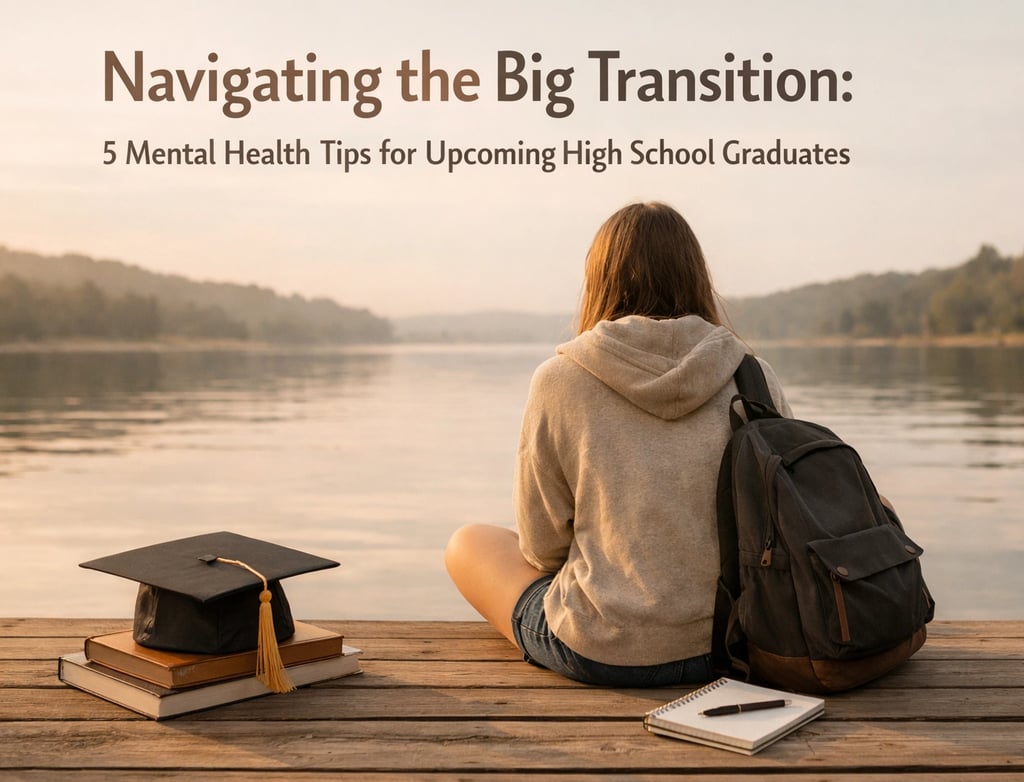
Navigating the Big Transition: 5 Mental Health Tips for Upcoming High School Graduates
Fightress Aaron, LPC, NBC
3/23/20266 min read
My post content
You’ve spent thirteen years in a system that told you where to be at 8:00 AM, when you could eat lunch, and exactly what boxes you needed to check to "succeed." Now, that finish line is finally in sight. Graduation isn't just a ceremony with a cap and gown; it’s a massive psychological shift. If you’re feeling a mix of absolute thrill and "I want to hide under my covers for a month," you’re exactly where you’re supposed to be.
The transition from high school to whatever comes next: be it a university campus, a trade school, or your first full-time job: is one of the biggest life changes you’ll ever face. It’s the first time many of you will have complete agency over your schedule, your friendships, and your mental health. While that freedom is exciting, it can also feel incredibly heavy. Research shows that roughly 75% of mental health conditions begin to emerge by age 24, making this bridge between "kid life" and "adult life" a critical time to prioritize your well-being.
At New Beginnings Counseling, we see you. We see the pressure you’re under to have it all figured out, and we want you to know that it is okay to feel a little lost. Whether you are looking for a therapist in Montgomery, AL, or you’re just looking for some guidance to get through the next few months, these tips are designed to help you navigate this transition with grace and resilience.
1. Acknowledge the "Middle Space" Emotions
Right now, you’re likely in what psychologists call "liminal space": the period of time between the "no longer" and the "not yet." You’re no longer a full-time high school student, but you aren’t quite a college student or a professional yet. This space is notorious for causing emotional whiplash.
You might feel a deep sadness about leaving your childhood friends, while simultaneously feeling a desperate urge to get out of your hometown. You might feel a surge of confidence one day and total imposter syndrome the next.
What you can do:
Validate the duality: Practice saying, "I am excited for college AND I am terrified of being lonely." Both can be true at the same time.
Talk about it: Don't let these feelings sit in the dark. Talk to your friends; chances are, they are feeling the exact same way but are too afraid to kill the "graduation party" vibe by mentioning it.
2. Build a Foundational Self-Care Routine (Before You Leave)
When you hit the dorms or start a 40-hour work week, your routine is going to get nuked. If you don't have a foundation of self-care already built, it’s much harder to start one when you’re stressed and sleep-deprived.
Self-care isn't just bubble baths and face masks; it’s the boring stuff that keeps your brain chemistry balanced. When your environment changes, your brain relies on these physiological anchors to feel safe.
Key areas to focus on:
Sleep Hygiene: Try to stabilize your wake-up time. Radical shifts in sleep patterns are one of the biggest triggers for anxiety and depression in young adults.
Nutrition: Learn a few basic, healthy meals you can make for yourself. If you’re heading to college, scout out the healthy options in the dining hall before you’re tempted by the late-night pizza every single night.
Movement: Find a way to move that doesn't feel like a chore. Whether it’s walking the trails in Montgomery or joining an intramural team, movement is a natural antidepressant.
If you’re worried about how to afford the tools you need for your mental health, check out our guide on HSA vs. FSA vs. Insurance vs. Private Pay to see how you can make your wellness a priority without breaking the bank.
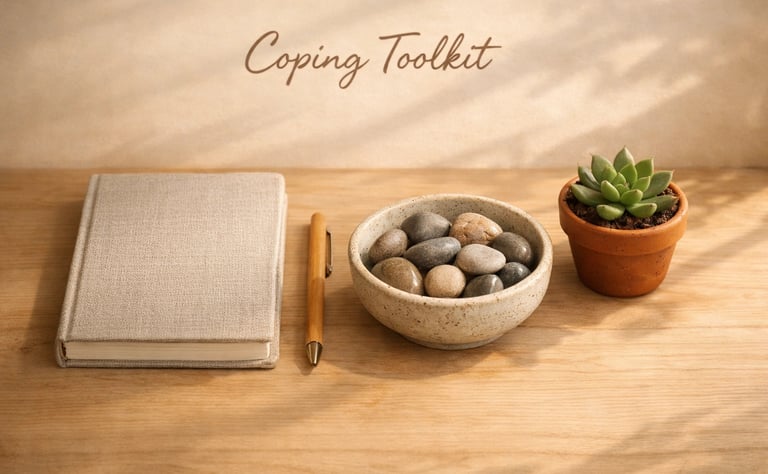
3. Develop Your "In-The-Moment" Coping Toolkit
Life after high school comes with a lot of "firsts." First time failing a midterm, first time dealing with a difficult boss, first time feeling truly homesick. In those moments, you need a toolkit of coping strategies that work for you.
When you’re overwhelmed, your nervous system goes into "fight, flight, or freeze" mode. You need ways to tell your brain that you are safe.
Try these practical techniques:
The 5-4-3-2-1 Method: Look around and name 5 things you see, 4 things you can touch, 3 things you hear, 2 things you can smell, and 1 thing you can taste. This grounds you in the present moment.
Box Breathing: Inhale for 4 seconds, hold for 4, exhale for 4, and hold for 4.
Journaling: Get the "brain fog" onto paper. Sometimes seeing your fears written down makes them feel much more manageable.
4. Re-evaluate and Expand Your Support System
In high school, your support system is often "accidental": it’s the people you sit next to in homeroom or your teammates on the field. As you graduate, you have to become more intentional about who you let into your inner circle.
This transition is also a great time to evaluate your relationship with your family. As you gain independence, those dynamics will shift. If you find yourself struggling with family expectations or "drama" during this transition, you might find our tips on boundary setting helpful as you navigate these new adult relationships.
How to find your people:
In College: Seek out clubs, student organizations, or group therapy options on campus.
In the Workforce: Look for mentors who have been where you are.
Professional Help: Sometimes, you need someone outside of your circle to talk to. If you’re looking for counseling services in Montgomery, AL, our team is specifically trained to help young adults navigate these transitions.
5. Practice Radical Self-Compassion
There is a huge myth that you need to have your entire life mapped out by the time
you walk across that stage. You don’t. In fact, most people change their majors multiple
times or switch career paths in their early twenties.
Self-compassion means treating yourself like you would treat a good friend.
If your best friend was stressed about a new job, would you tell them they’re a failure?
Probably not. You’d tell them it takes time to learn. Give yourself that same grace.
Reminders for the journey:
It is okay to change your mind.
It is okay to ask for help.
Your worth is not tied to your GPA or your entry-level salary.
If you find that the pressure to be high-achieving is starting to weigh too heavily on you, you’re not alone. Many young women, in particular, find themselves carrying a "mental load" that leads to burnout before they’ve even started their careers. You can learn more about identifying these signs in our post about high-achieving women and therapy.
A Note to Parents
If you are the parent of a graduating senior, this transition is huge for you, too. You’re navigating the "empty nest" or at least a shift in your role from "manager" to "consultant." It’s natural to feel anxious about your child’s mental health as they head out into the world.
The best thing you can do is keep the lines of communication open and non-judgmental. Let them know that seeking therapy is a sign of strength, not a sign that they "can't hack it." If you’re noticing signs that your teen might be struggling with the transition, reaching out to a professional early can make a world of difference.
We’re Here for Your New Beginning
Transitions are rarely a straight line. They are messy, confusing, and full of growth. Whether you’re moving away for school or starting your career right here in the River Region, remember that you don’t have to do it alone.
New Beginnings Counseling is a compassionate space where we help individuals and families navigate life’s biggest changes. We believe that everyone deserves a safe place to heal, grow, and figure out their next steps.
If you’re feeling the weight of graduation or the "real world," or if you just want to talk through the changes you’re facing, we are here for you.
To receive support, visit us at www.nbcounselingllc.com or call or text us at 334-293-1411.
You’ve got this, Class of 2026. This is just the beginning of your story, and you have everything you need to make it a great one.






Connect
Reach out for personalized healing support.
hello@nbcounselingllc.com
© 2025. All rights reserved.
LOCATION
Serving clients located in Alabama and Florida